AI platforms recommend businesses directly, so being absent means lost customers.
Thin content and weak authority signals keep most sites invisible to AI.
Structured, deep, authoritative content is what platforms choose to cite.
An AI readiness audit measures your visibility and prioritises fixes, from $100.
Visibility is earned, not switched on, through sustained content and authority work.

This reshapes how customers find you. It does not matter how well your website ranks in traditional search if AI platforms never mention your business when customers ask the questions that matter. In the AI readiness audits we run, the most common result we see is not a low ranking but a complete absence. The business is not mentioned at all when we ask the platforms the questions its customers ask. Not poorly ranked, but absent entirely.
What this guide covers:
AI search differs fundamentally from traditional Google searches by providing curated answers instead of a list of options. Google organises information and lets the user decide, whereas AI platforms synthesise data from multiple sources to deliver a direct response. When a user asks a question, the AI might name specific businesses, recommend providers, or explain the pros and cons of different options. The user gets a curated answer rather than a reading list.
This is the fundamental shift. Google shows options. AI picks for you.
It is worth noting that AI features are not a wholly separate system. Google's own guidance confirms that a page must be indexed and eligible to appear in standard Search before it can surface in AI Overviews or AI Mode Google Search Central, 2026. Solid fundamentals remain the foundation, but depth and authority decide who actually gets named.
Four platforms are driving this change, each with different approaches. ChatGPT, Google Gemini, Perplexity, and Claude each draw on different data sources and use different methods to decide which businesses to mention.
A business might appear in Perplexity's responses but be completely absent from ChatGPT's, or vice versa. This inconsistency is one of the things that makes AI visibility challenging, and why a structured approach to measurement matters.
For most businesses, AI search is not a separate channel to optimise for. It is an evolution of how customers find information and make decisions. The customer who used to type a query into Google is now asking ChatGPT the same question and getting a direct answer.
This means the competition has shifted. You are no longer competing for a position on a search results page. You are competing to be the business that AI platforms choose to name when a customer asks a relevant question. This requires a fundamentally different approach.
For a detailed comparison of how AI search differs from traditional Google search and what those differences mean for your website, see how AI search differs from Google.
AI readiness is one of the most misunderstood terms in digital marketing right now. It is frequently confused with using AI to write content, adding chatbots, or building internal corporate strategies.
AI readiness is the state of your website being structured, authoritative, and content-rich enough to be referenced by AI platforms when they answer questions relevant to your business.
It is not about using AI to write your content. It is not about implementing AI chatbots on your website. It is not about having an "AI strategy" for your internal operations. It is simply about whether your business appears in the answer when a potential customer asks an AI platform a question about your industry or services.
AI readiness rests on three foundational elements that help platforms understand and trust your business.

It is not about using AI tools to generate your content (that is a production decision, not a readiness factor)
It is not about adding AI features to your website (chatbots, recommendation engines, and the like)
It is not about having a corporate AI policy or AI ethics framework
It is not a one-time project you complete and forget about
AI readiness is an ongoing state. The platforms evolve, their data sources change, and your competitors improve. Maintaining this readiness requires continuous monitoring and improvement of your content and authority signals.
For a thorough explanation of AI readiness and why your website needs it, see what AI readiness is and why your website needs it.
No Structured Data
Structured data or schema markup explicitly tells AI platforms what your content is about by clearly defining your services, location, and practitioners. Without it, AI must unreliably interpret raw text.
Most small and mid-sized business websites lack structured data entirely, making them much harder for platforms to parse and categorise.
Poor Content Depth
Even businesses with a reasonable amount of content can be invisible if it lacks depth. AI platforms ignore brief, surface-level posts and build answers from detailed, authoritative sources. This reflects Google's own published guidance, which asks whether content demonstrates first-hand expertise and a genuine depth of knowledge Google Search Central, 2026.
If a user asks how to choose a physiotherapist, a short paragraph will be ignored. To be referenced, you need in-depth guides covering qualifications, specialisations, red flags, and appointment questions.
No Tropical Coverage
AI platforms evaluate the breadth and depth of your content on a particular subject. Publishing a single post about a topic builds minimal authority, whereas consistently covering different conditions, treatments, and strategies establishes you as an expert.
Topical coverage is cumulative. Each piece of content you publish on a related topic strengthens your authority in that area. Businesses that publish sporadically on random topics build no topical authority at all.
For a detailed exploration of why businesses are invisible to AI platforms and what to do about it, see why your business is invisible to ChatGPT.
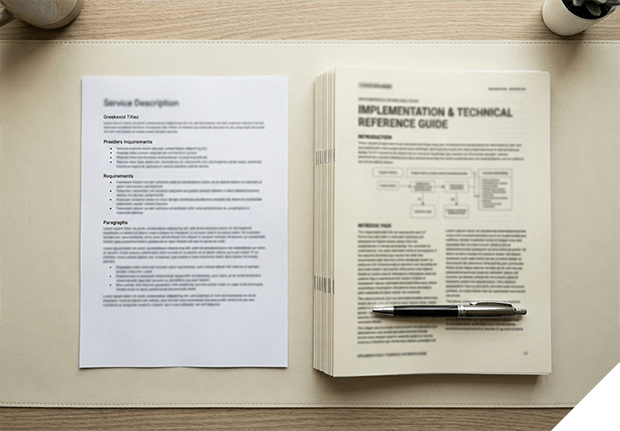
Every business has core topics covering its services and the problems it solves. Your content must go well beyond the basics to thoroughly explain your processes, expected outcomes, and alternatives.
For every service, we recommend detailing what it is, who it is for, how it works, the costs, the timeframe, and what makes your approach different. If your service page is just a few sentences and a call to action, you have work to do.
AI platforms synthesise answers from detailed sources. If your content lacks this depth, it simply will not be used.
Building authority relies on original research, external mentions, and consistent directory listings. AI platforms actively evaluate your credibility, meaning claims backed by data or citations carry far more weight than unsupported promotional statements.
This is especially important for healthcare and professional services where trust drives decisions. A practice citing clinical research is much more likely to be referenced by AI than one simply claiming its treatments are effective.
For specific strategies on getting your business recommended by AI platforms, see how to get recommended by AI platforms.

Patients increasingly ask AI platforms for help choosing a clinic, comparing treatments, and understanding what to expect before booking. A practice that publishes detailed, accurate, compliant content on its treatments and patient pathways gives platforms the material they need to recommend it.
A practice that only lists services will be passed over in favour of one that explains procedures, recovery, candidacy, and frequently asked questions. In the healthcare audits we run, this is the single biggest gap we see between practices that get named and those that do not. Depth and accuracy matter most in a sector where trust drives every decision.
For a detailed look at how AI search is reshaping patient acquisition, see how AI search is changing the way patients find healthcare practices.


Agencies face a unique situation as they are actively adjusting to AI search themselves, yet they are the ones expected to guide their clients through it.
For agencies, AI visibility serves two purposes. First, it attracts direct clients who are looking for marketing partners. Second, it validates their expertise. A client is significantly more likely to trust an agency that is itself visible in AI search than one that is not.
You can build this visibility using familiar tactics like sharing your methodology, publishing anonymised case studies, and proving your specialisation. Agencies that practise what they preach by ranking in AI search themselves instantly win more trust.
We offer an AI readiness audit as our Foundations-tier website audit, starting at $100. It is the most accessible entry point in our website audit range and is designed to give you a clear, research-backed assessment of where you stand in AI search.
We test your visibility across ChatGPT, Google Gemini, Perplexity, and Claude using queries tailored to your specific industry and location. You receive a detailed report featuring your composite score, platform breakdowns, competitor comparisons, and a prioritised action plan. This is a genuine assessment rather than a disguised sales pitch, providing actionable information that is yours to keep whether you choose to work with us further or not.
For a detailed explanation of what the audit covers and what it tells you, see what an AI readiness audit actually tells you.